GEN AI EXPERIMENTS (2026)
AI AGENT + BLENDER | TWO SHORT FILMS | NOVEMBER 2026
TOOLS: CLAUDE CODE | BLENDER | COMFYUI | QWEN-IMAGE-EDIT | TRELLIS.2
Two short films made in November 2026, two years after my first Gen AI experiments. Last time I was after the output; this time I wanted to see what an agent could build on its own. I wrote the briefs, made the decisions and corrected the results. Claude Code, Anthropic’s AI coding agent, did the rest: it built both films in Blender by writing and running Python scripts, and separate AI reviewers scored each step. All image and 3D generation ran locally on one RTX 5070 Ti.
HYBRID FAIRY
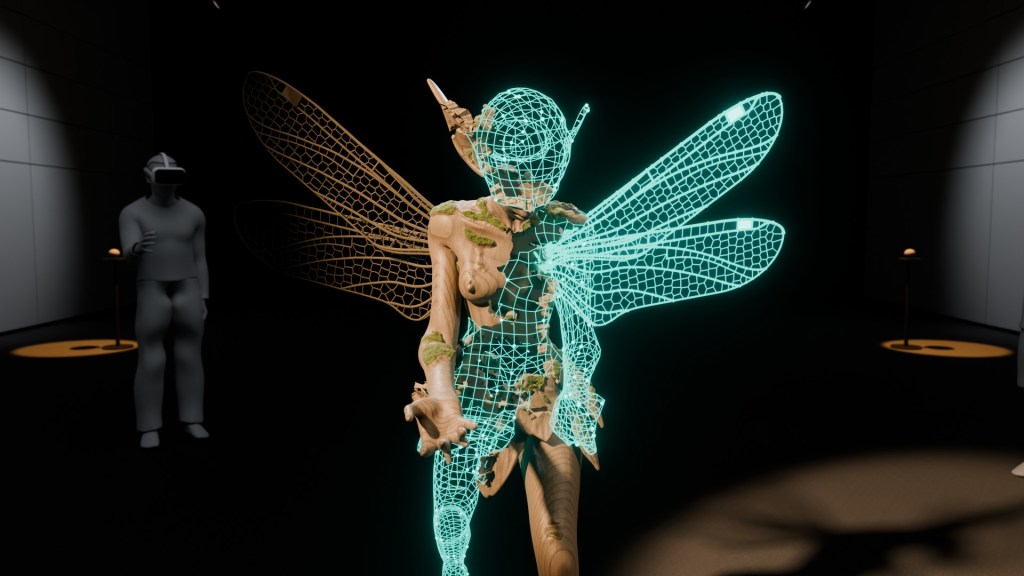
A fairy sculpture, half carved oak and moss, half glowing wireframe, stands in an exhibition hall among visitors. 30 seconds.
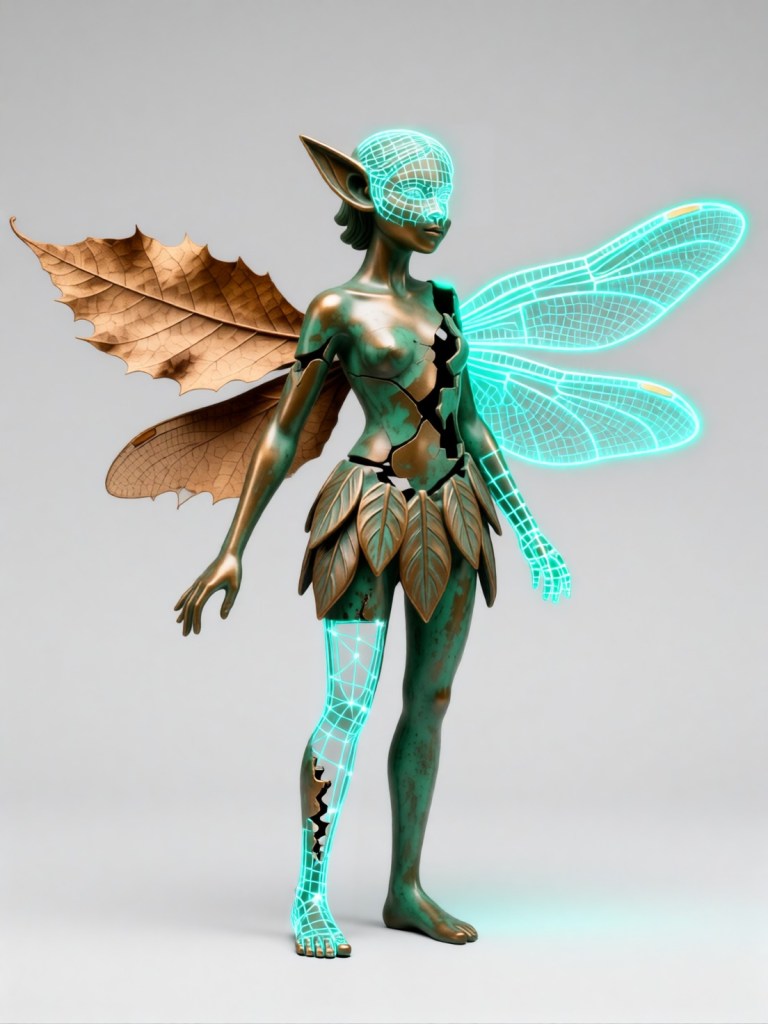
1. Concept in 2D. Four directions were generated as pictures in ComfyUI. I combined the bronze figure of one with the wireframe of another and set what had to be digital: the top of the head, one arm, one leg.
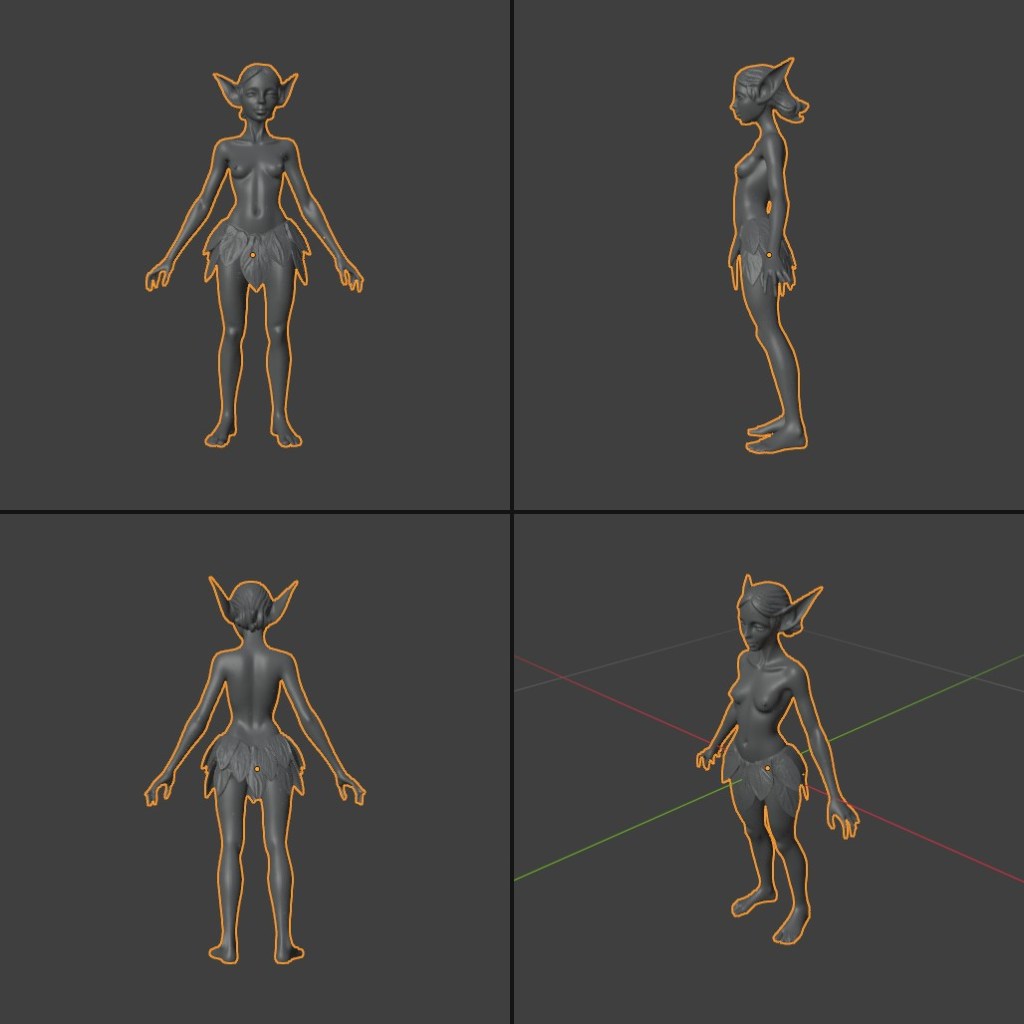
2. Picture to 3D. A clean picture of the intact statue, without wings, went into TRELLIS.2, an image-to-3D model. The raw mesh had pinholes and double shells; a solid remesh closed it at 2.27 million triangles.
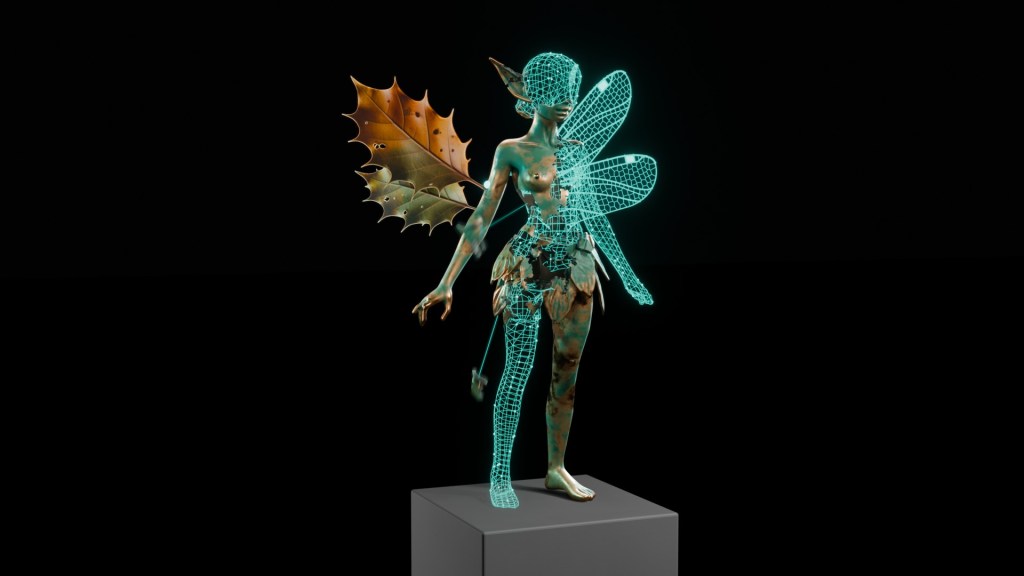
3. A first 5-second clip. Scripts split the body into bronze and wireframe parts, added the wings and the flying shards, and rendered the clip. My note on the first split: “more like eaten apart by digitality”.
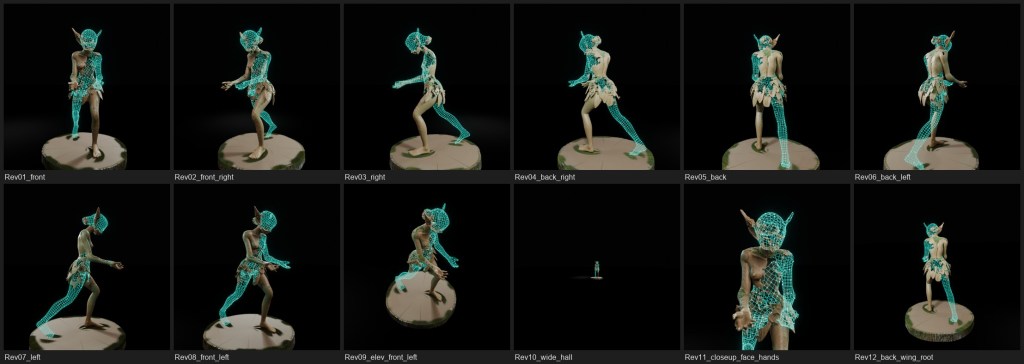
4. New pose, new materials. For the second film the same mesh got a skeleton of 24 bones, was bent into a lunge by script, scaled to human size and given carved oak and moss. Rendered each time from 12 fixed review cameras and scored.
5. Hall and visitors. The hall is geometry built by script: panelled walls, trusses with spotlights, lit pedestals. Five grey visitors from a CC0 body library stand around her; two wear VR headsets, two watch her on a TV.
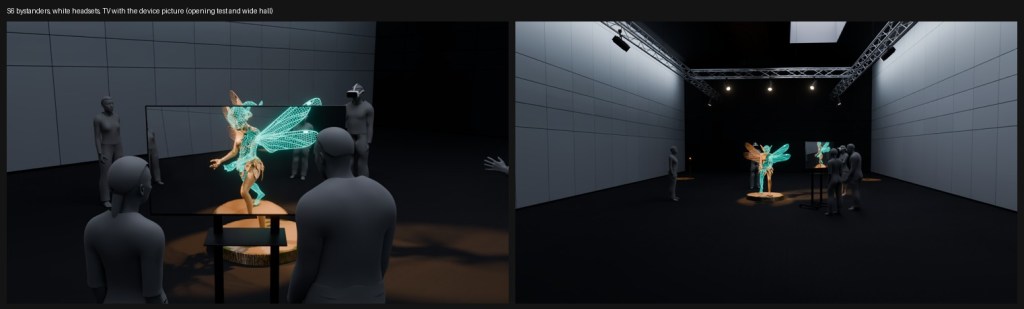
6. Final render. The camera circles inside the ring of visitors and pushes in while the missing half draws itself on in cyan. Two final renders in Cycles took 3 h 16 min and 2 h 52 min. No review round reached the pass mark of 8 out of 10 on every item; I accepted the second version.
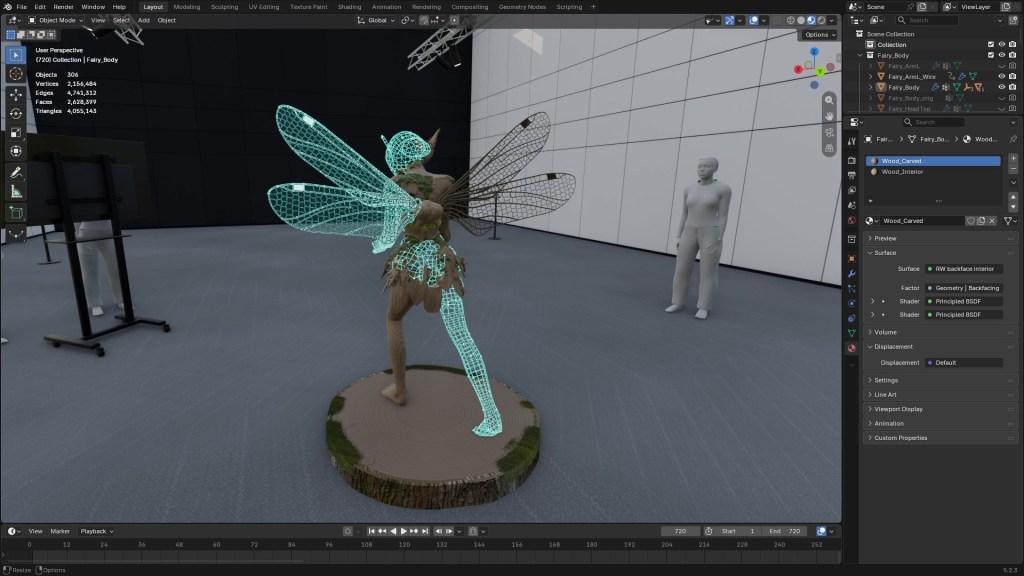
7. Proof that it is 3D. A frame from a 360-degree recording of Blender’s viewport: the film shows a real 3D scene, not a generated video.
Time and cost. Both fairy films, 6 to 9 November 2026: 40 messages from me, 10.7 hours of agent work, 107 helper agents, 6.5 hours of final rendering. 1,345 million tokens, about 600 USD at API list prices. The work ran on a Claude Max subscription (100 USD per month), so that figure is an equivalent, not a bill.
Tools and licences. Claude Code (Claude Opus 5.5; reviewers on Claude Sonnet 5.5), Blender 5.2 through MCP for Blender, ComfyUI with Qwen-Image-Edit 2511 (Apache-2.0), BiRefNet and TRELLIS.2 (MIT; its DINOv3 encoder under Meta’s DINOv3 License). Textures from Poly Haven, visitors from Blender Studio’s Human Base Meshes, sounds from Freesound by felix.blume, kyles, mbthetd and Rudmer_Rotteveel, all CC0.
REMEMBERING YOUR EARTH FORM
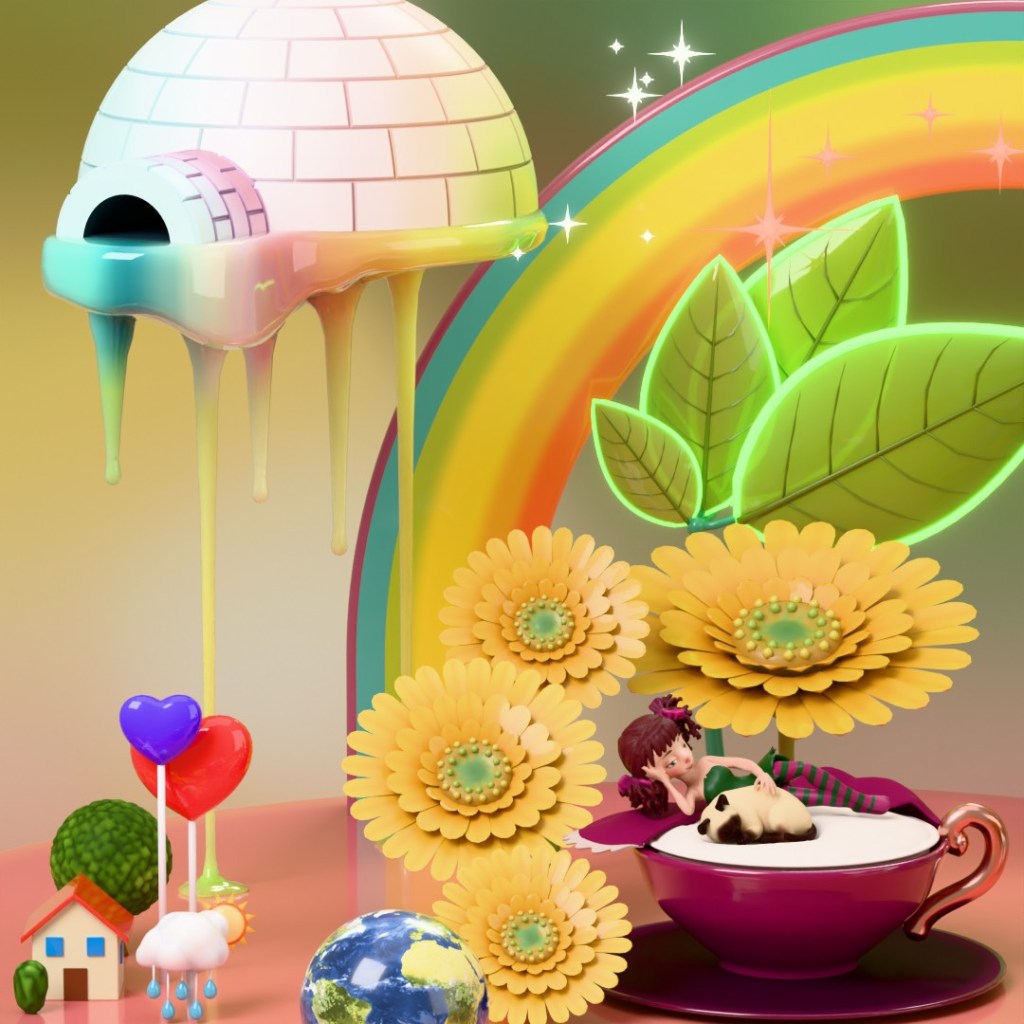
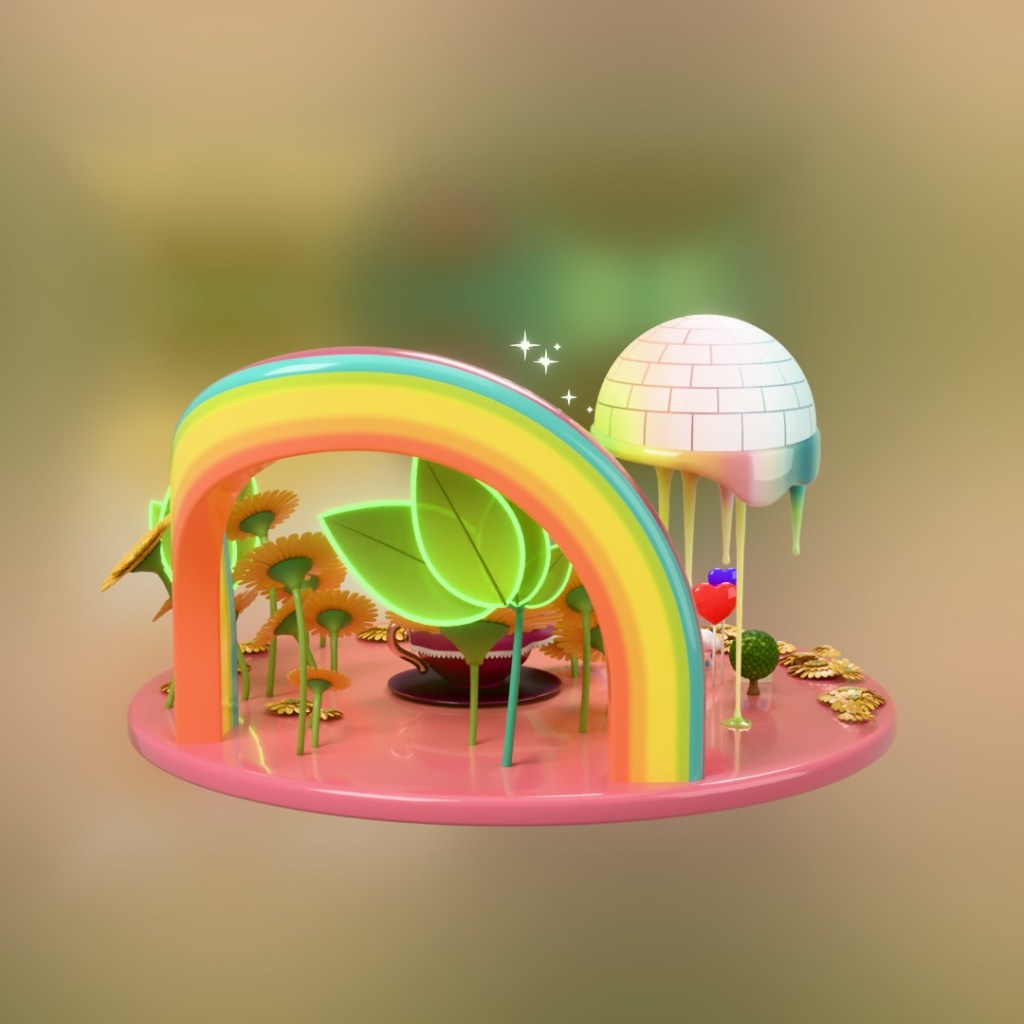
A tabletop diorama in the round, after an album cover. A 24-second turntable loop.
A non-commercial study after the cover of “Remembering Your Earth Form” by MindSpring Memories (Aloe City Records, 2019). The rights to the cover remain with their holders.
1. Fix the camera first. Every element sits on the line of sight through its place on the cover, at a chosen depth, so the scene matches the cover from that one angle and is built in the round from every other.
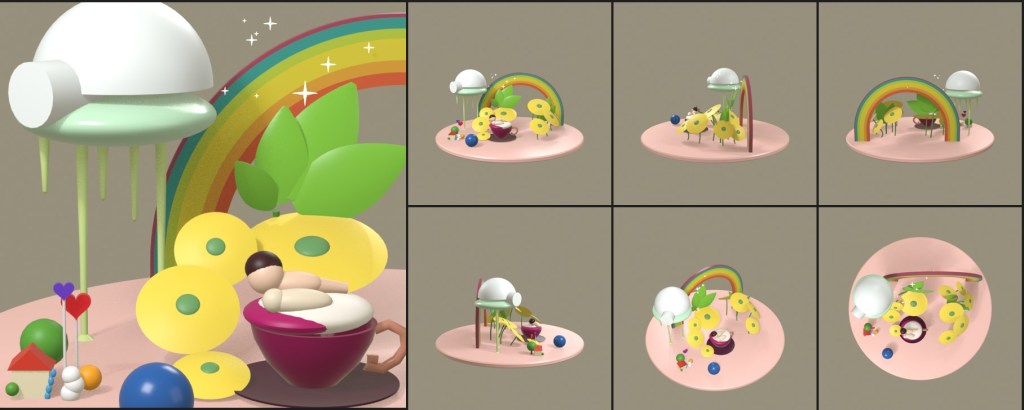
2. Props by script. Five agents each wrote one Python module: stage, igloo, cup, toys, flowers. After every change four automatic checks ran: no intersecting objects, room around every flower, a clean export, fewer than 400,000 triangles.
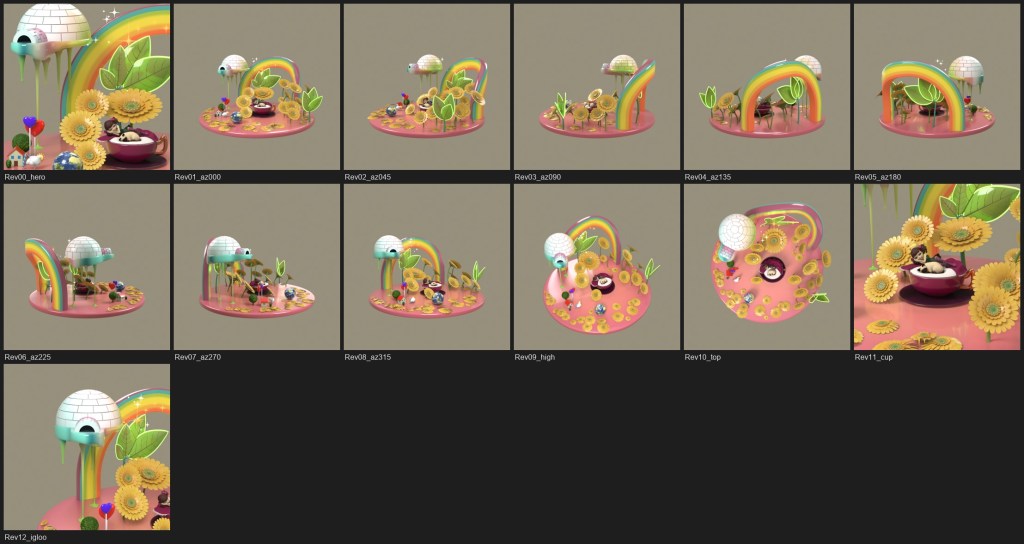
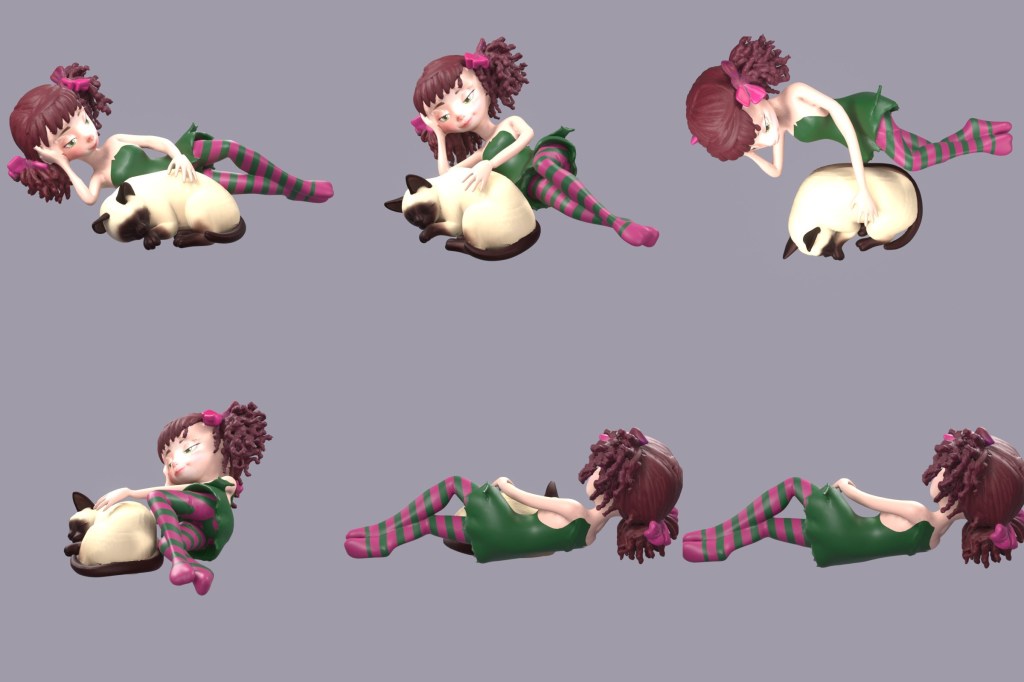
3. The girl and the cat. The only generated parts. An image model redrew them as figurines, TRELLIS.2 turned the drawings into meshes, and scripts repaired them. The girl went through three versions; on my suggestion her arm got two joints and was lowered onto the cat by script.
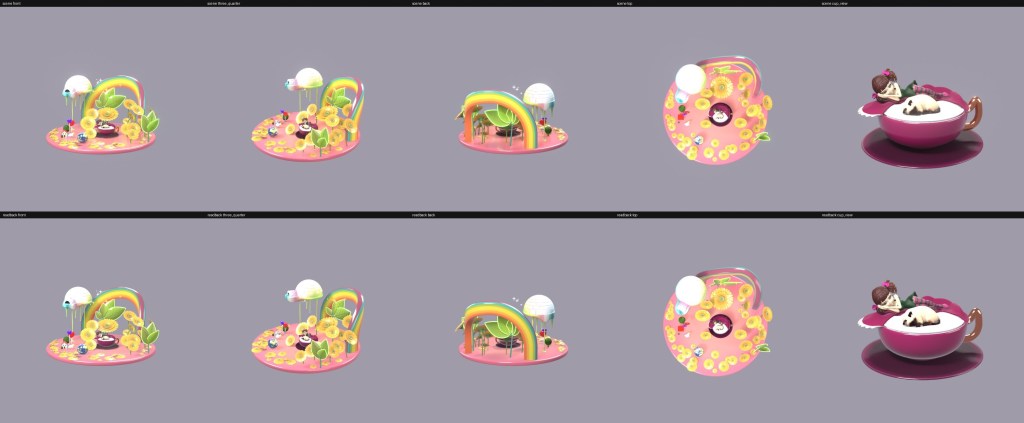
4. Look and real-time model. Colours were measured against the cover region by region. The same scene exports as a GLB for the web, without backdrop, lights or glow.
5. Final render. 576 frames in Cycles, 1080 x 1080. Three reviewers passed the first final; my four fixes (drips, leaves, raindrops, a small hair patch) went into a second.
Time and cost. 11 to 16 November 2026: 20 messages from me, 9.7 hours of agent work, 40 written reviews, two final renders of 38 and 36 minutes. 1,078 million tokens, about 551 USD at API list prices, on the same subscription.
Tools and licences. Claude Code, Blender 5.2 through MCP for Blender, ComfyUI with Qwen-Image-Edit 2511 (Apache-2.0), BiRefNet and TRELLIS.2 (MIT; its DINOv3 encoder under Meta’s DINOv3 License). Globe map: NASA/Goddard Space Flight Center Scientific Visualization Studio. The Blue Marble Next Generation data is courtesy of Reto Stockli (NASA/GSFC) and NASA’s Earth Observatory. Colours altered.

